
2.5 Curriculum Component (CC)
When making a lesson plan, we generally begin with the intended learning outcomes and then consider the related learning activities to fit into the lesson.
The Learning Design Triangle, introduced in the previous sections, consists of three key elements:
- Intended Learning Outcomes (ILOs)
- Disciplinary Practices (DP)
- Pedagogical Approach (PA)
This framework serves a similar purpose but provides a method to scaffold your learning design in a more comprehensive and purposeful way.
In this section, we will introduce a new concept, the Curriculum Component (CC), which will help in designing learning activities and assessments that align with the three key elements of the Learning Design Triangle.
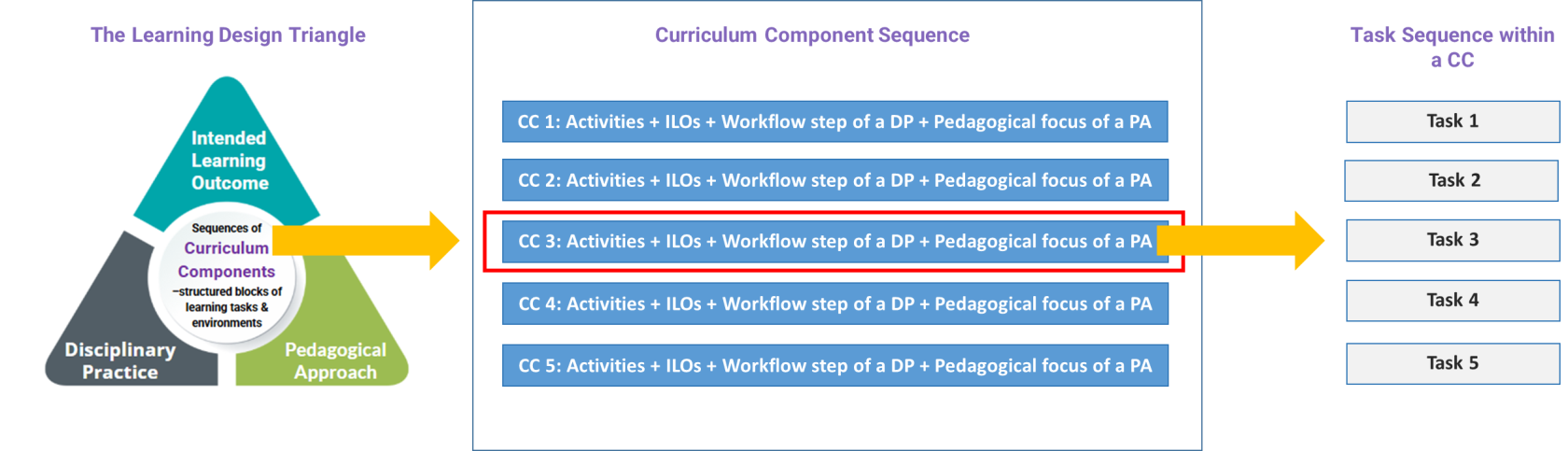
Figure: 2.4 An Illustration of the Learning Design Triangle and the Curriculum Component Sequence
- A CC is a unit designed to provide learners with relevant knowledge, skills, and values, and to evaluate these through a defined set of ILOs.
- Each CC typically focuses on a specific workflow step of a DP and is supported by a pedagogical focus of a chosen PA (e.g., "identifying problems for goal-setting" in Engineering design).
- The defined set of intended learning outcomes are associated with a particular workflow step of a DP.
- Each CC is carefully designed to organize the task sequence required to achieve the defined set of ILOs.
-
Multiple CCs are arranged in a logical sequence to form a CC Sequence.
-
The CC Sequence mirrors all the workflow steps of a DP in a K-12 context and ensures the assessment of all ILOs within a comprehensive learning design.
We will then explore an example of the Curriculum Component Sequence for a STEAM subject and a Language subject in the coming sections. This will help you gain a better understanding of what a Curriculum Component (CC) is and how it connects to the Learning Design Triangle.