
2.2 Intended Learning Outcomes (ILOs)
Intended Learning Outcomes (ILOs)
Intended Learning Outcomes (ILOs) indicate what students are expected to achieve as a result of the learning process. They serve as a foundation for the entire learning design process, guiding the design of learning activitiestasks and assessment methods.assessments.
Guide to Writing Intended Learning Outcomes
How to Write Effective Intended Learning Outcomes?
A well-written ILO is essential for effective learning and teaching. Key features include:
|
Feature |
Description |
Example |
|---|---|---|
| Student-centred | Describe what learners will achieve, not what the teacher will teach. |
❌ The teacher will introduce the main stages of the water cycle.
✅ Explain the main stages of the water cycle. |
| Measurable | Specify outcomes that can be observed and assessed. |
❌ Write a good essay.
✅ Write a persuasive essay with a clear thesis and supporting arguments. |
| Specific | Clearly define the knowledge, skills, values, or attitudes that learners are expected to achieve. |
❌ Understand the history of World War II.
✅ Identify the key causes of World War II. |
| Appropriate difficulty | Achievable but challenging for most target learners. |
❌Provide a summary of all the main arguments discussed in the debate.
✅ Summarize two key arguments presented during the debate. |
The Four Categories of Intended Learning Outcomes in the Learning Design Studio
|
Category |
Description |
Example |
|---|---|---|
| Disciplinary Knowledge | The core concepts, theories, facts, and frameworks that are recognized and developed within a particular field or area of study. |
Identify the simple past tense as verbs for past events. |
| Disciplinary Skills | The specific techniques, methods, and competencies associated with a particular field or area of study. |
Construct sentences about yesterday’s activities using the simple past tense. |
| Generic Skills | The broad abilities that help people succeed in education, work, and daily life, regardless of a particular field or area of study. | Apply effective communication strategies to share ideas with others. |
| Values and Attitudes | The beliefs, principles, and dispositions that guide a person's behavior, decision-making, and interactions with others. |
Demonstrate openness by considering new perspectives and adapting to challenges. |
Writing Cognitive Learning Outcomes using Bloom’s Taxonomy
When designing your Intended Learning Outcomes (ILOs), it is recommended to use Bloom’s Taxonomy, a widely recognized framework that aids educators in formulating clear and measurable learning outcomes. Bloom’s Taxonomy categorizes cognitive skills into different levels—such as remembering, understanding, applying, and analyzing—ensuring your ILO statements comprehensively address key aspects of student learning.
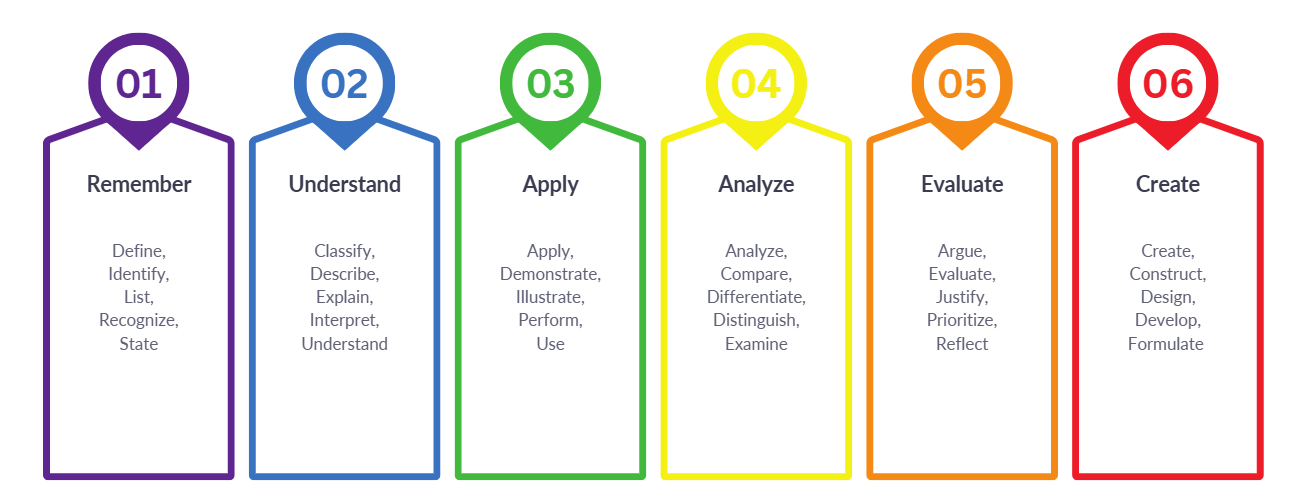
Figure 2.2: Bloom’s Taxonomy of the Cognitive Domain
Bloom’s Taxonomy breaks learning into six cognitive levels:
|
Bloom's Level |
Example of ILOs |
|---|---|
| 1. Remember - Recall facts |
List the main stages of the water cycle. |
| 2. Understand - Explain ideas |
Describe how water moves through each stage of the water cycle. |
| 3. Apply - Use knowledge in new situations |
Illustrate the water cycle by matching real-life weather events to each stage. |
| 4. Analyze - Draw connections among ideas |
Compare the processes of the water cycle in different climates and environments. |
| 5. Evaluate - Make judgments |
Evaluate the effects of pollution on the water cycle. |
| 6. Create - Produce original work | Design a simple model |
Reference
Arkansas State University. (n.d.). Bloom's revised taxonomy: Cognitive, affective, and psychomotor. https://www.astate.edu/a/assessment/assessment-resource-links/files/Revised-Bloom%20s-Taxonomy-All-Domains.pdf