2. Learning Design Triangle (LDT)
- 2.1 Introduction
- 2.2 Intended Learning Outcomes (ILOs)
- 2.3 Disciplinary Practice (DP)
- 2.4 Pedagogical Approach
- 2.5 Curriculum Component Sequence
- 2.5.1 Curriculum Component Sequence Example - A STEAM Course
- 2.5.2 Curriculum Component Sequence Example - A Language Course
- 2.6 Task Taxonomy
- 2.7 Supplementary Learning Resources
2.1 Introduction
Introduction to the Learning Design Triangle (LDT)
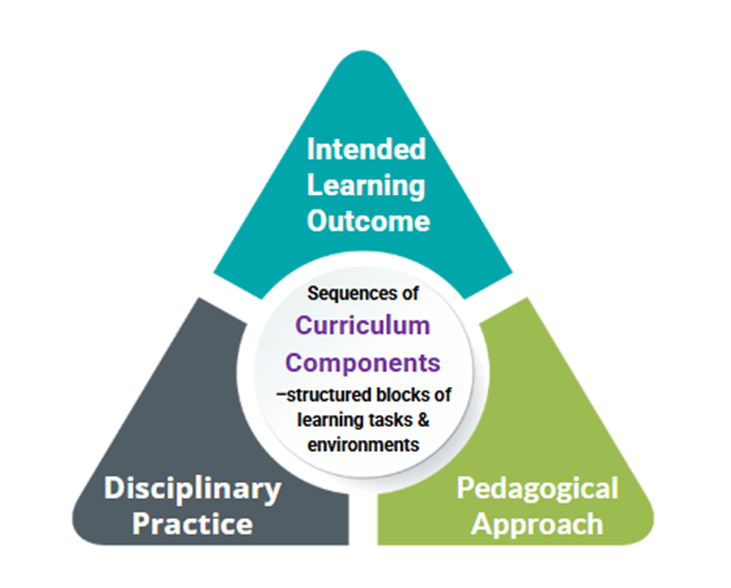
Figure 2.1: The Learning Design Triangle (LDT)
The Learning Design Triangle (LDT) is a conceptual framework developed to help educators create effective and coherent learning experiences of learners. It emphasizes the integration and alignment of three core elements:
- Intended Learning Outcomes
- Disciplinary Practice
- Pedagogical Approach
This alignment enables educators to
- Plan purposeful curriculum units
- Reflect on their teaching strategies
- Continuously improve student learning by connecting learning tasks with clear goals and real-world relevance
The details of the three core elements of LDT—Intended Learning Outcomes, Disciplinary Practice, and Pedagogical Approach—along with their application to Curriculum Components and Learning Tasks, will be explored in the following sections in this chapter.
Reference:
Law, N., & Liang, L. (2020). A multilevel framework and method for learning analytics integrated learning design. Journal of Learning Analytics, 7(3), 98-117.
2.2 Intended Learning Outcomes (ILOs)
Intended Learning Outcomes (ILOs)
Intended Learning Outcomes (ILOs) indicate what students are expected to achieve as a result of the learning process. They serve as a foundation for the entire learning design process, guiding the design of learning tasks and assessments.
Guide to Writing Intended Learning Outcomes
How to Write Effective Intended Learning Outcomes?
A well-written ILO is essential for effective learning and teaching. Key features include:
|
Feature |
Description |
Example |
|---|---|---|
| Student-centred | Describe what learners will achieve, not what the teacher will teach. |
❌ The teacher will introduce the main stages of the water cycle.
✅ Explain the main stages of the water cycle. |
| Measurable | Specify outcomes that can be observed and assessed. |
❌ Write a good essay.
✅ Write a persuasive essay with a clear thesis and supporting arguments. |
| Specific | Clearly define the knowledge, skills, values, or attitudes that learners are expected to achieve. |
❌ Understand the history of World War II.
✅ Identify the key causes of World War II. |
| Appropriate difficulty | Achievable but challenging for most target learners. |
❌Provide a summary of all the main arguments discussed in the debate.
✅ Summarize two key arguments presented during the debate. |
The Four Categories of Intended Learning Outcomes in the Learning Design Studio
|
Category |
Description |
Example |
|---|---|---|
| Disciplinary Knowledge | The core concepts, theories, facts, and frameworks that are recognized and developed within a particular field or area of study. |
Identify the simple past tense as verbs for past events. |
| Disciplinary Skills | The specific techniques, methods, and competencies associated with a particular field or area of study. |
Construct sentences about yesterday’s activities using the simple past tense. |
| Generic Skills | The broad abilities that help people succeed in education, work, and daily life, regardless of a particular field or area of study. | Apply effective communication strategies to share ideas with others. |
| Values and Attitudes | The beliefs, principles, and dispositions that guide a person's behavior, decision-making, and interactions with others. |
Demonstrate openness by considering new perspectives and adapting to challenges. |
Writing Cognitive Learning Outcomes using Bloom’s Taxonomy
When designing your Intended Learning Outcomes (ILOs), it is recommended to use Bloom’s Taxonomy, a widely recognized framework that aids educators in formulating clear and measurable learning outcomes. Bloom’s Taxonomy categorizes cognitive skills into different levels—such as remembering, understanding, applying, and analyzing—ensuring your ILOs comprehensively address key aspects of student learning.
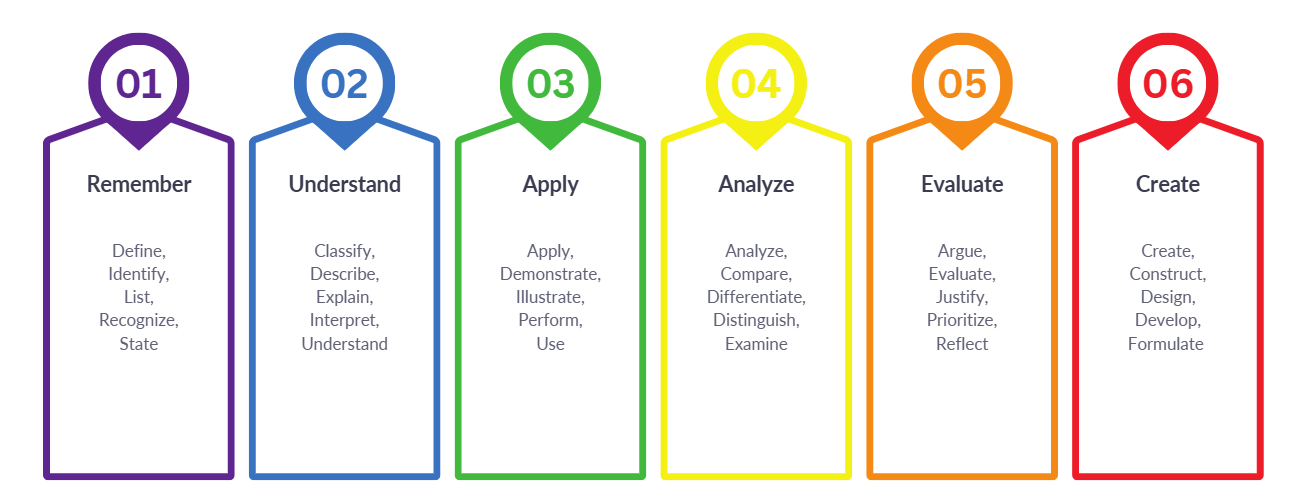
Figure 2.2: Bloom’s Taxonomy of the Cognitive Domain
Bloom’s Taxonomy breaks learning into six cognitive levels:
|
Bloom's Level |
Example of ILOs |
|---|---|
| 1. Remember - Recall facts |
List the main stages of the water cycle. |
| 2. Understand - Explain ideas |
Describe how water moves through each stage of the water cycle. |
| 3. Apply - Use knowledge in new situations |
Illustrate the water cycle by matching real-life weather events to each stage. |
| 4. Analyze - Draw connections among ideas |
Compare the processes of the water cycle in different climates and environments. |
| 5. Evaluate - Make judgments |
Evaluate the effects of pollution on the water cycle. |
| 6. Create - Produce original work | Design a simple model to demonstrate the water cycle. |
Reference
Arkansas State University. (n.d.). Bloom's revised taxonomy: Cognitive, affective, and psychomotor. https://www.astate.edu/a/assessment/assessment-resource-links/files/Revised-Bloom%20s-Taxonomy-All-Domains.pdf
2.3 Disciplinary Practice (DP)
Disciplinary Practice (DP)
Disciplinary Practice (DP) refers to the specific ways of thinking, doing, and creating that are characteristic of a particular field or profession. It situates learning within authentic contexts that reflect how knowledge and skills are applied in the real world. Within any discipline, there are explicit workflow steps that guide how professionals manage and complete tasks.
To integrate the DP into the K-12 learning context, we have simplified the workflows to create DP Patterns for use in the Learning Design Studio. Please see the examples below.
|
Disciplinary Practice |
Role of Learner |
Details |
|---|---|---|
| Engineering Design |
Engineer, Inventor |
Description The disciplinary practice of 'Engineering Design' supports our young learners to apply their knowledge and skills in developing effective solutions to real-world problems. Like engineers and inventors, learners will engage in identifying problems, then ideate, design, create, and optimize solutions to address those challenges.
Workflow steps
|
| Writing a News Report |
Journalist |
Description The disciplinary practice of ‘Writing a News Report’ supports our young learners in engaging with the inquiry-based process of writing. Like journalists, learners must collect and verify information, organize their findings logically, and write in an objective and impartial tone to create a timely, factual, and engaging report that helps audiences understand current events and issues.
Workflow steps
|
| Mock Legislative Procedure |
Legislator |
Description The disciplinary practice of 'Mock Legislative Procedure' supports our young learners in collaboratively drafting legislation that addresses specific issues. Like legislators, learners engage in researching background information, analyzing the interests and impacts of various parties, and drafting legislative proposals. Through constructive collaboration, they work to reach consensus and develop legislation that incorporates ideas from different stakeholders.
Workflow steps
|
| Performance Production |
Performer, Entertainer |
Description The disciplinary practice of 'Performance Production' supports our young learners in transforming literature into engaging performances. Like performers and entertainers, learners will engage in reading and analyzing literature, developing scripts, collaborating in rehearsals, and performing for audiences to produce a compelling and expressive performance that effectively communicates the themes and messages of the literature.
Workflow steps
|
| Scientific Investigation |
Scientist |
Description The disciplinary practice of 'Scientific Investigation' supports our young learners in exploring the natural world and developing evidence-based explanations. Like scientists, learners will engage in formulating inquiry questions, proposing hypotheses, designing and conducting experiments, and using logical reasoning to draw informed conclusions that deepen their understanding of scientific phenomena and processes.
Workflow steps
|
2.4 Pedagogical Approach
A pedagogical approach refers to the method or strategy that a teacher uses to deliver instruction and facilitate learning. It encompasses the underlying beliefs, techniques, and practices employed to help students acquire knowledge, skills, and values. One approach we promote is Self-directed Learning (SDL).
|
|
Self-Directed Learning (SDL) is recognized as an important approach for developing life and career skills that prepare students for further education and the workforce.
SDL has two key characteristics:
Personal Responsibility:
Social Interaction:
|

Key Components and Indicators of SDL
The operational framework of SDL includes five essential components: goal setting, self-planning, self-monitoring, self-evaluation and revision.
|
SDL Components |
Description |
|---|---|
| 1. Goal-setting |
|
| 2. Self-planning |
|
| 3. Self-monitoring |
|
| 4. Self-evaluation |
|
| 5. Revision |
|
Reference
Hew, K. F., Law, N., Wan, J., Lee, Y., & Kwok, A. (2016). Self-directed learning in science education: Explicating the enabling factors. In C.-K. Looi, J. Polman, U. Cress, & P. Reimann (Eds.), Transforming learning, empowering learners: ICLS conference proceeding (Vol. 2, pp. 761–768). Singapore: International Society of the Learning Sciences.
Knowles, M. S. (1975). Self-directed learning: A guide for learners and teachers. Chicago, IL: Follet.
2.5 Curriculum Component Sequence
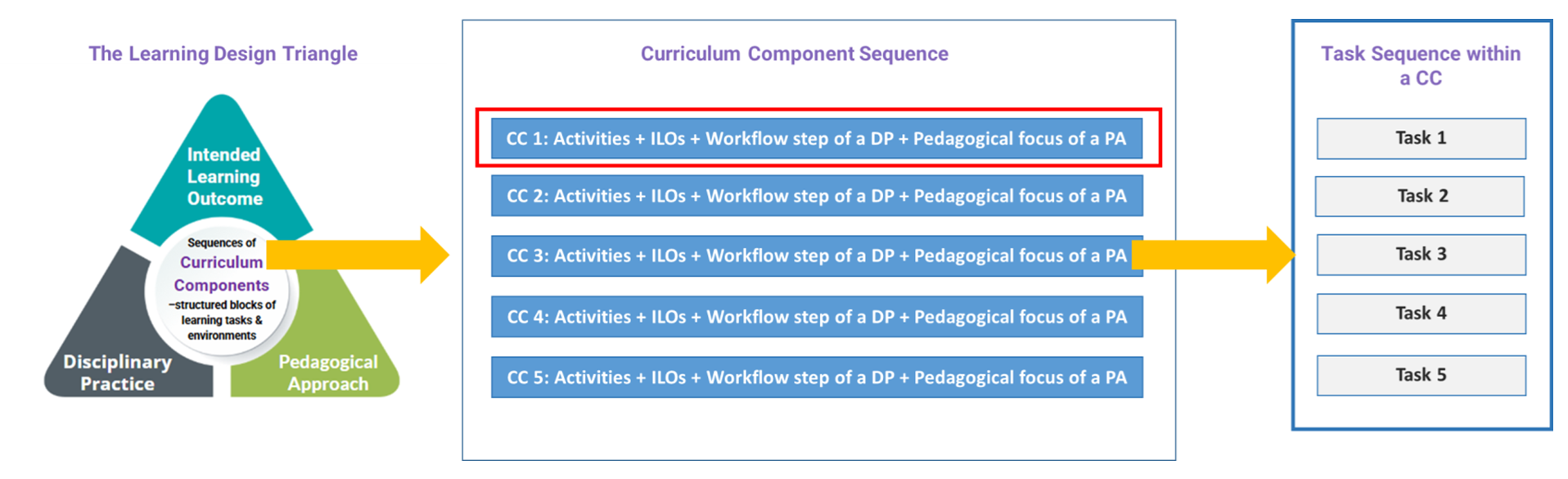
Figure: 2.4 An Illustration of the Learning Design Triangle and the Curriculum Component Sequence
From Sections 2.2 to 2.4, you have explored the three elements of the Learning Design Triangle, which together provide the contextual framework for anchoring the entire learning design. In this section, we will examine the Curriculum Component (CC) Sequence, which serves as a bridge between the abstract Learning Design Triangle and the concrete learning and assessment tasks. The CC Sequence guides learning designers in gradually transforming overarching design concepts into actionable teaching practices.
In the following section, we will explore examples of learning designs for both a STEAM subject and a language subject. This will help you gain a better understanding of what a Curriculum Component Sequence is and how it connects to the Learning Design Triangle.
2.5.1 Curriculum Component Sequence Example - A STEAM Course
In this section, we will explore how to transform the elements of the Learning Design Triangle (LDT) into a Curriculum Component (CC) Sequence for a STEAM course. Considering that we are designing a course titled "Factors affecting Rate of Photosynthesis: Learning through Scientific Investigation".
1. The Learning Design Triangle
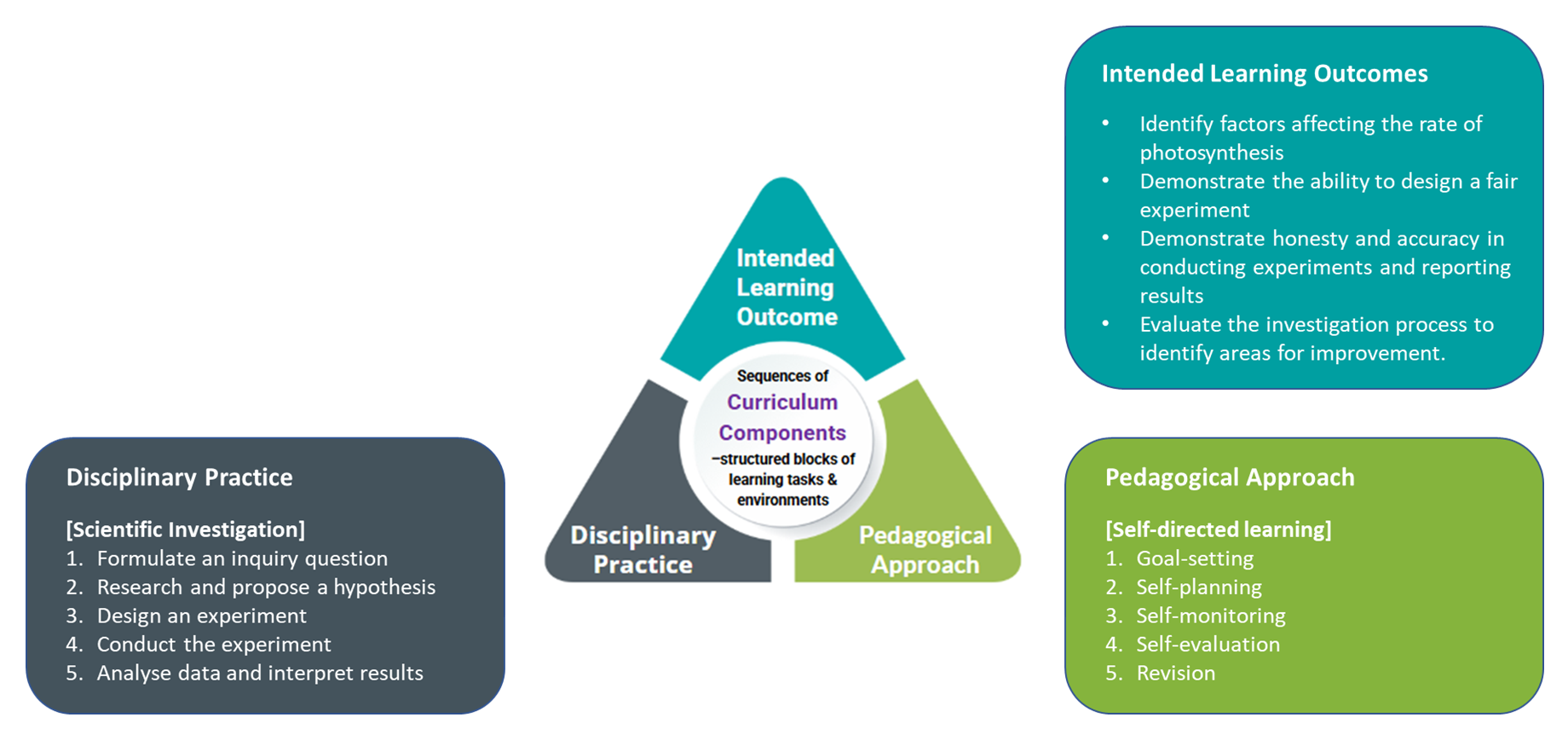
Figure 2.5: The Learning Design Triangle of "Factors affecting Rate of Photosynthesis: Learning through Scientific Investigation"
-
To anchor the learning design within a contextual framework, we will use the Learning Design Triangle to define the intended learning outcomes, disciplinary practices, and pedagogical approach.
2. The Curriculum Components Sequence
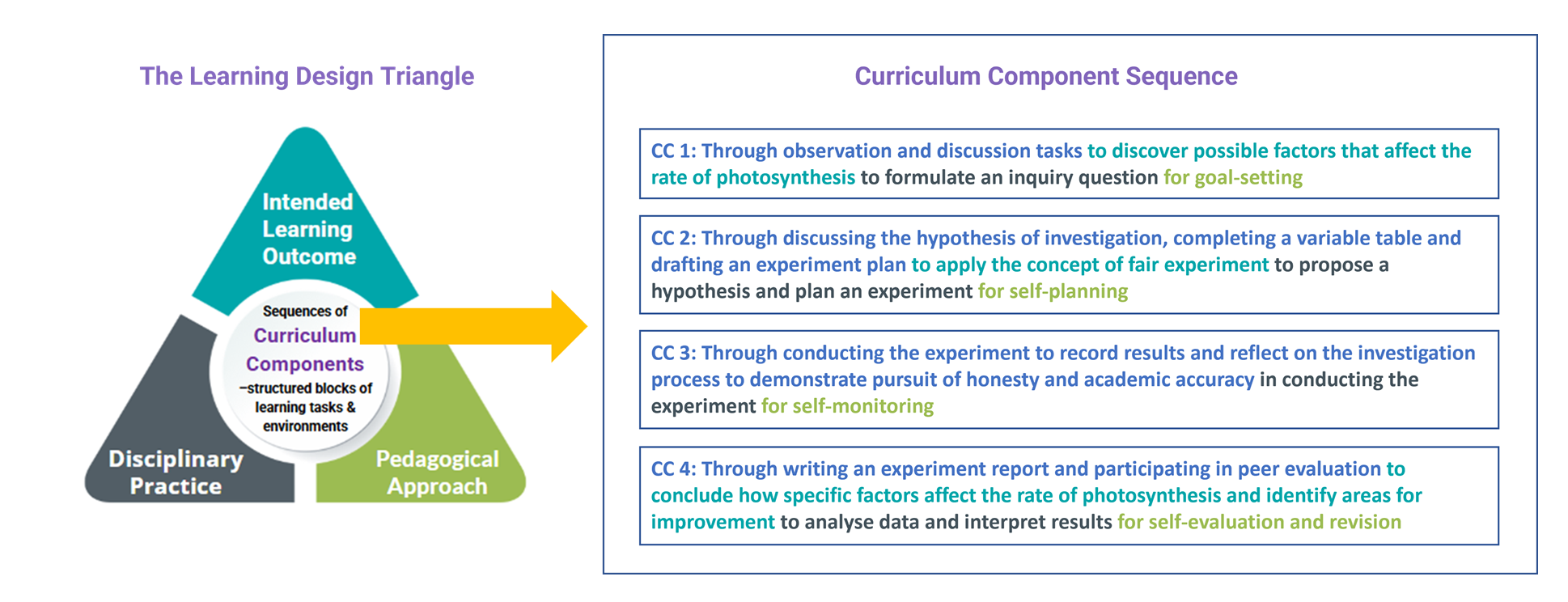 Figure 2.6: The Curriculum Component Sequence of "Factors affecting Rate of Photosynthesis: Learning through Scientific Investigation"
- To make the learning process more manageable, we divide it into distinct phases within the learning design, guided by the workflow steps of disciplinary practice. Each phase targets a specific set of learning outcomes and is supported by the pedagogical focus of the chosen approach, such as self-directed learning.
- In the Learning Design Triangle framework, we use Curriculum Component to structure and organize each phase of learning around targeted outcomes. The collection of curriculum components that represents all phases of learning in a course is called a Curriculum Component Sequence.
3. Assign learning tasks to each Curriculum Components
- To put the Curriculum Components into practice, we need to assign learning tasks and assessments to enhance and evaluate learners’ development in knowledge, skills, or values.
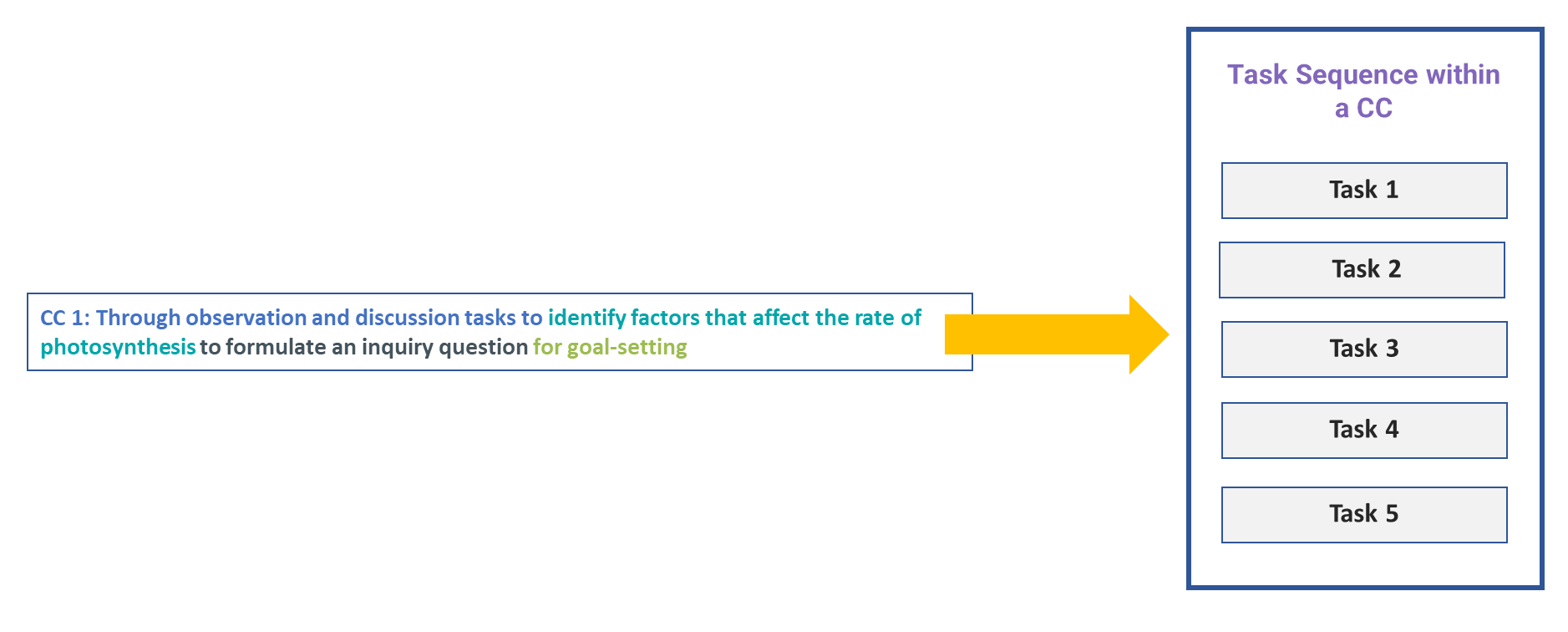
Figure: 2.7 Task Sequence within a Curriculum Component
- Now, we will explore an example of a Curriculum Component (CC) focused on the "goal-setting" phase.
| CC Name |
A CC name is formed by combining four components.
E.g. Through observation and discussion tasks to discover possible factors that affect the rate of photosynthesis to formulate an inquiry question for goal-setting |
||||||||||
| Linked Intended Learning Outcomes |
|
||||||||||
| Workflow Step of Disciplinary Practice | Scientific Investigation-Formulate an inquiry question | ||||||||||
| Pedagogical Focus | Self-directed Learning - Goal-setting | ||||||||||
| Learning Tasks |
* Each task type has a representative color.
|
The tasks in a CC:
- A task can be both a learning task and an assessment.
- A well-formulated task sequence helps build knowledge and skills step-by-step while enabling ongoing assessment of student understanding.
-
The introduction of the task types will be covered in Chapter 2.6 - Task Taxonomy.
🌟 The link to the learning design of this sample course.
2.5.2 Curriculum Component Sequence Example - A Language Course
In this section, we will explore how to transform the elements of the Learning Design Triangle (LDT) into a Curriculum Component (CC) Sequence for a language course. Considering that we are designing a course titled "Inquiry-based Curriculum Unit that Cultivates Students' Expository Skills and Creativity".
1. The Learning Design Triangle
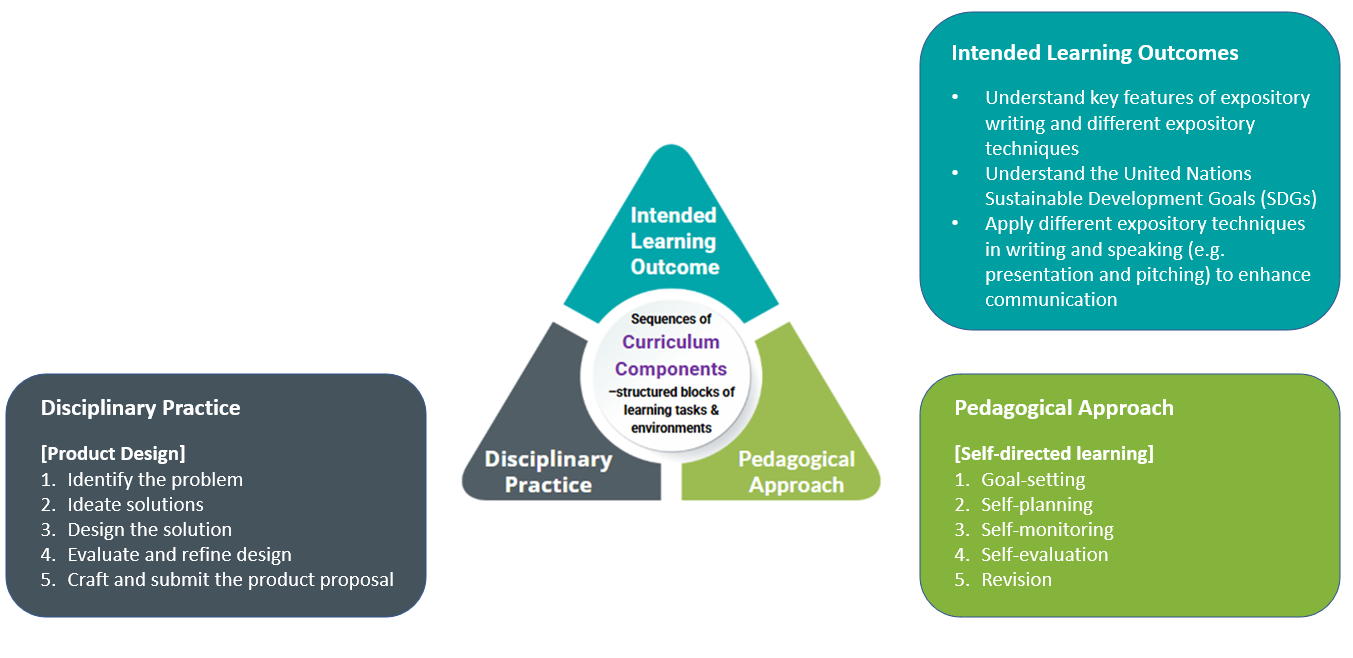
Figure 2.8: The Learning Design Triangle of "Inquiry-based Curriculum Unit that Cultivates Students' Expository Skills and Creativity"
-
To anchor the learning design within a contextual framework, we will use the Learning Design Triangle to define the intended learning outcomes, disciplinary practices, and pedagogical approach.
2. The Curriculum Components Sequence
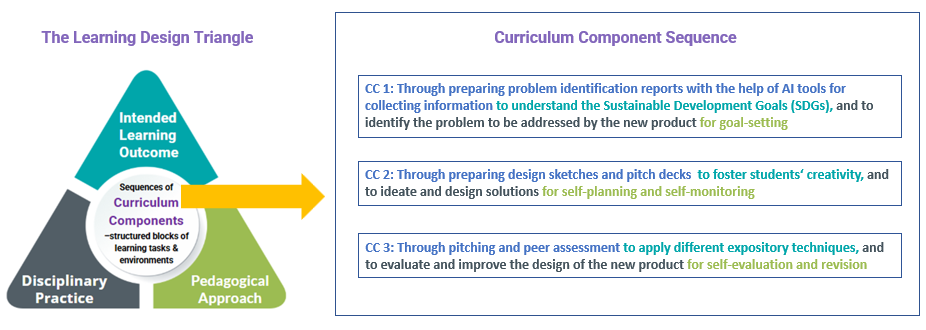
Figure 2.9: The Curriculum Component Sequence of "Inquiry-based Curriculum Unit that Cultivates Students' Expository Skills and Creativity"
- To make the learning process more manageable, we divide it into distinct phases within the learning design, guided by the workflow steps of disciplinary practice. Each phase targets a specific set of learning outcomes and is supported by the pedagogical focus of the chosen approach, such as self-directed learning.
- In the Learning Design Triangle framework, we use Curriculum Component to structure and organize each phase of learning around targeted outcomes. The collection of curriculum components that represents all phases of learning in a course is called a Curriculum Component Sequence.
3. Assign learning tasks to each Curriculum Components
- To put the Curriculum Components into practice, we need to assign learning tasks and assessments to enhance and evaluate learners’ development in knowledge, skills, or values.
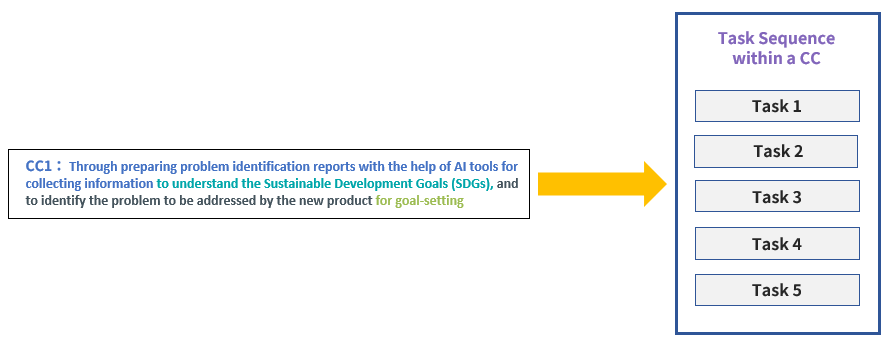
Figure: 2.10 The Task Sequence within a Curriculum Component
- Now, we will explore an example of a Curriculum Component (CC) focused on the "goal-setting" phase.
| CC Name |
A CC name is formed by combining four components.
E.g. Through preparing problem identification reports with the help of AI to understand the Sustainable Development Goals (SDGs), and to identify the problem to be addressed by the new product for goal-setting |
||||||||||||||||
| Linked Intended Learning Outcomes |
|
||||||||||||||||
| Workflow Step of Disciplinary Practice | Engineering Design-Identify the problem | ||||||||||||||||
| Pedagogical Focus | Self-directed Learning - Goal-setting | ||||||||||||||||
| Learning Tasks |
* Each task type has a representative color.
|
The tasks in a CC:
- A task can be both a learning task and an assessment.
- A well-formulated task sequence helps build knowledge and skills step-by-step while enabling ongoing assessment of student understanding.
-
The introduction of the task types will be covered in Chapter 2.6 - Task Taxonomy.
🌟 The link to the learning design of this sample course.
2.6 Task Taxonomy
The Learning Design Studio (LDS) provides a well-structured ontology of 12 task types, grouped under four categories: 1) Directed Learning, 2) Exploratory Learning, 3) Productive Learning, and 4) Reflective Learning. These task types help make explicit the nature and intent of the learning experiences planned for students, ensuring a balanced and purposeful approach to learning design.
| Directed Learning | ||
| Receiving & Interpreting Information
Students undertake prescribed activities to acquire information and develop an understanding of a topic.
STEAM Subject:
Language Subject:
|
||
|
Practice Students work through prescribed tasks to apply learnt content/ skills.
STEAM Subject:
Language Subject:
|
||
|
Test / Assessment Students take part in assessment activities.
STEAM Subject:
Language Subject:
|
||
| Exploratory Learning | ||
| Information Exploration Students seek out and gather existing information from various sources to deepen their understanding of a topic.
STEAM Subject:
Language Subject:
|
||
|
Explorations through Conversation Students engage in exploration of issues with others through conversations.
STEAM Subject:
Language Subject:
|
||
|
Tangible / Immersive Investigation Students conduct hands-on investigations in physical or virtual settings, generating new data through experiments, surveys, or direct observation.
STEAM Subject:
Language Subject:
|
||
| Productive Learning | ||
| Construction: Conceptual / Visual Artefacts Students work individually or together to construct a conceptual, visual artifact.
STEAM Subject:
Language Subject:
|
||
| Construction: Tangible / Manipulable Artefacts Students work individually or together to construct a tangible, manipulable artifact.
STEAM Subject:
Language Subject:
|
||
| Presentation, Performance and Illustration Students present, illustrate or perform individually or in group.
STEAM Subject:
Language Subject:
|
||
| Reflective Learning | ||
| Reflection Students engage in reflecting on the learning process & experience and making the thoughts explicit.
STEAM Subject:
Language Subject:
|
||
| Revision Students are given an opportunity to re-submit a piece of work, hence giving them a chance to reflect and improve.
STEAM Subject:
Language Subject:
|
||
| Self- / Peer- assessment Students engage in peer- and/ or self- assessment (using self-generated or teacher-provided rubric)
STEAM Subject:
Language Subject:
|
||
2.7 Supplementary Learning Resources
Publications
Chen, D., Liang, L., & Law, N. (2022). Navigating Multilevel Challenges in Learning Design: An Investigation of Novice Designer Teams’ Learning Trajectory International Journal of Mobile Learning and Organisation. Retrieved from https://www.inderscience.com/admin/ospeers/getInProduction.php?id=106381&fid=15028&fromonsusy=yes
Li, Herrera, L.F., Liang, L. & Law, N. (2022). An outcome-oriented pattern-based model to support teaching as a design science. Instructional Science, 50, 111-142. doi:10.1007/s11251-021-09563-4. Retrieved from https://link.springer.com/article/10.1007/s11251-021-09563-4
Law, N., & Liang, L. (2020). A Multilevel Framework and Method for Learning Analytics Integrated Learning Design. JOurnal of learning analytics, 1(1). Retrieved from https://learning-analytics.info/index.php/JLA/article/download/6828/7535
Law, N., Li, L., Herrera, L. F., Chan, A., & Pong, T. C. (2017). A pattern language based learning design studio for an analytics informed inter-professional design community. Interaction Design & Architecture(s), (33), 92-112. Retrieved from http://www.mifav.uniroma2.it/inevent/events/idea2010/doc/33_5.pdf